
MATERIALS & CRAFT · ARCADIA · SAN GABRIEL VALLEY
Custom Cabinetry Lead Time: Why 45 Days Is the Honest Answer
Anyone quoting custom cabinetry in two weeks is either selling something that is not custom, or planning to disappoint you. Here is what the production window actually covers, why it starts when it starts, and how to order so the build never stands around waiting.
THE SHORT ANSWER.
The clock starts at approved drawings, not at the deposit.
Custom cabinetry is made to order against approved drawings and confirmed material selections. The production window — up to 45 days at full capacity — covers everything after that point: material preparation, cutting, joining, finishing, hardware fitting, inspection and packing. It does not cover the decisions that come before it.
That distinction is the whole article. Projects that wait on cabinetry almost never wait on the factory. They wait on a finish sample that was never approved, a dimension that changed after the site was measured, or a hardware selection left open “for now.”
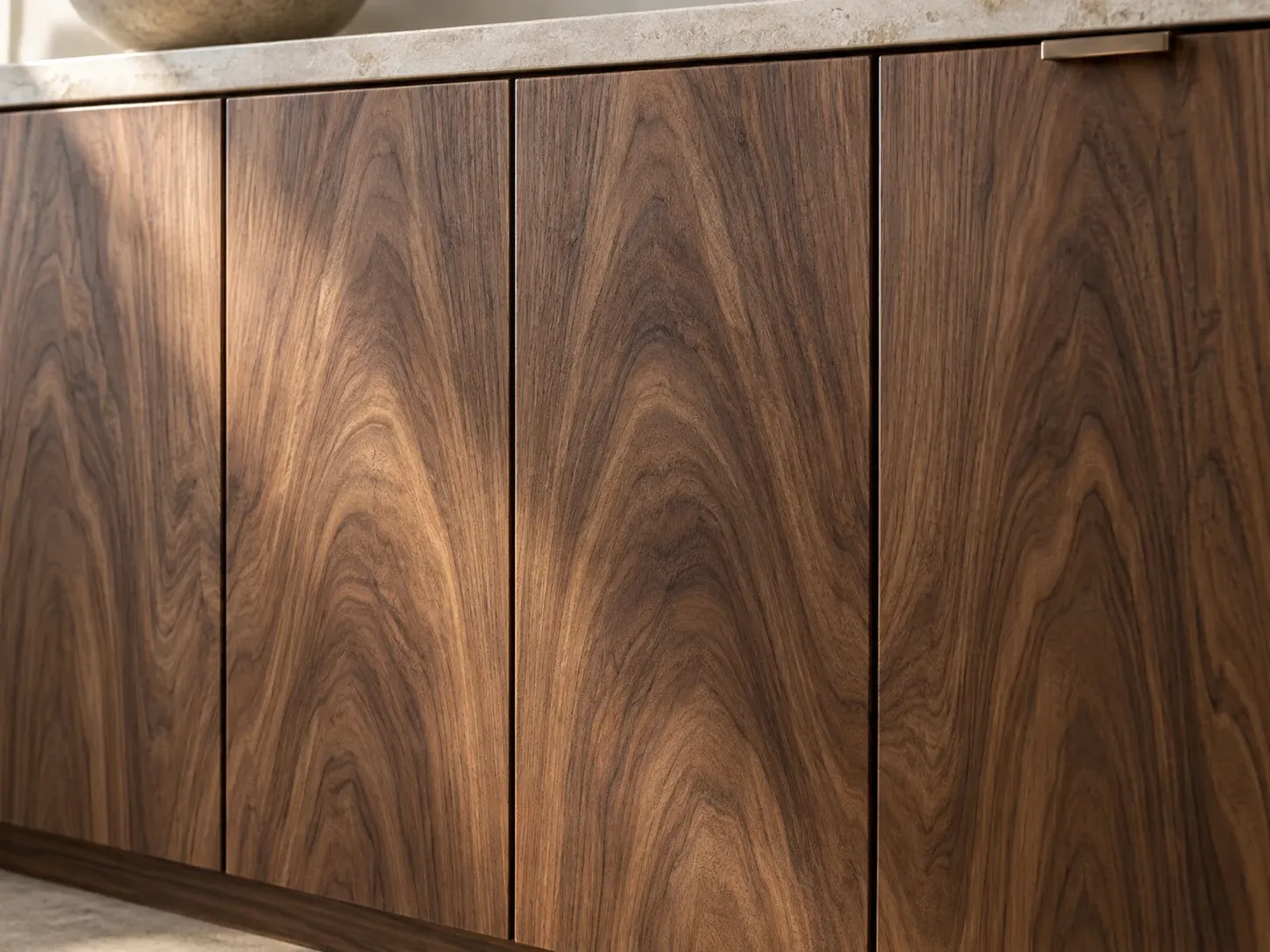
Made to order, not off a shelf
Every unit is produced to the drawings for your rooms — which is why grain matching, panel joints and integrated details are possible, and why “in stock” is not a thing that exists here.
THE PRODUCTION WINDOW.
What the 45 days actually covers.
From the day drawings and selections are approved, a typical made-to-order run moves through the stages below. The window is a maximum, not a target — simple scopes in standard finishes often finish sooner, and complex joinery with special veneers takes the full window honestly.
| Stage | What happens | What must be locked |
|---|---|---|
| Material preparation | Plywood, veneer and solid stock are allocated and acclimatised for the run. | Species, veneer grade and finish system — these decide what gets ordered. |
| Cutting and panel sizing | Components are cut to the approved dimensions for each unit. | Final dimensions from the site measurement, signed off. |
| Joinery and assembly | Carcasses are assembled, doors and frames are joined, integrated details are fitted. | Construction type: framed or slab, integrated or applied. |
| Finishing | Sealing, staining or painting, with cure time between coats. | Finish approval on physical samples — not screens, not photos. |
| Hardware and fitting | Hinges, runners and hardware are fitted and adjusted. | Hardware series and configuration per opening. |
| Inspection and packing | Units are checked against the drawings, then crated for transit. | Nothing new. This is the stage where late changes cost the most. |
BEFORE THE CLOCK.
The three weeks that decide the schedule.
Everything before approval is your timeline, not the factory’s. Drawings are produced from the site measurement. Samples are made and approved. Hardware series is chosen. On a normal project this front end takes two to three weeks of calendar time, and it is the part that slips — because it depends on decisions, not production.
The site measurement is the piece homeowners most often underrate. Cabinetry measured before the room is ready gets built to dimensions that no longer exist, and the correction happens at the worst possible moment: after production, before install.
Sequence it correctly and the two windows — your decisions and the factory’s production — overlap almost perfectly with the construction phases they serve.
ORDERING WELL.
Five rules that keep the build moving.
Approve finishes on physical samples
Wood is a natural material and a photo is not a finish decision. Samples in the actual room light, approved in writing, are what the factory builds to.
Measure after the room is ready
Framing complete, plumbing and electrical roughed in, walls where they will finally be. Measurement day is the point of no return for dimensions.
Freeze the schedule of openings
Every door, drawer and opening — its size, its hardware, its neighbor. Late additions are new units, not adjustments.
Order before dry-in
Cabinetry should be in production while the site is still open. If it is ordered after the house is closed up, the install waits on production with nothing else to do.
Keep the approvals in writing
Drawings, samples, hardware — approved in writing, in one place. Memory is not a specification, and “we discussed it” is not a record.
WHERE IT FITS.
Lead time against the rest of the project.
On a kitchen or whole-home project, cabinetry is usually the longest-lead item — longer than countertops, longer than most fixtures, longer than the trades. That makes it the pacing item for the whole schedule, which is why the selection sequence around it deserves more attention than its budget share suggests.
Plan the project backward from the day cabinetry needs to be on site, and every other decision — countertop templating, appliance delivery, trade scheduling — finds its natural place. See how to choose cabinetry and finishes and the catalog for the range the drawings can specify.
FAQ.
Cabinetry lead time questions we get most.
Why does custom cabinetry take up to 45 days?
Because it is genuinely made to order: material allocation, cutting, joinery, multi-coat finishing with cure time, hardware fitting and inspection. The window covers real production stages — compressed schedules mean one of them gets skipped.
When does the lead time start?
When drawings and material selections are approved in writing. Nothing before that point is production time, and treating it as such is how projects end up waiting on a factory that was never given the green light.
Can the schedule be shortened?
Within a run, simple scopes in standard finishes often complete ahead of the maximum. What cannot be compressed is finishing cure time and inspection — the two stages that decide whether the units arrive right.
What is the single most common cause of delay?
Finish approval. A decision left open after the samples arrive stops the run before it starts. Approving samples promptly is the highest-leverage thing a homeowner can do for the schedule.
Do the same lead times apply to doors and wall panels?
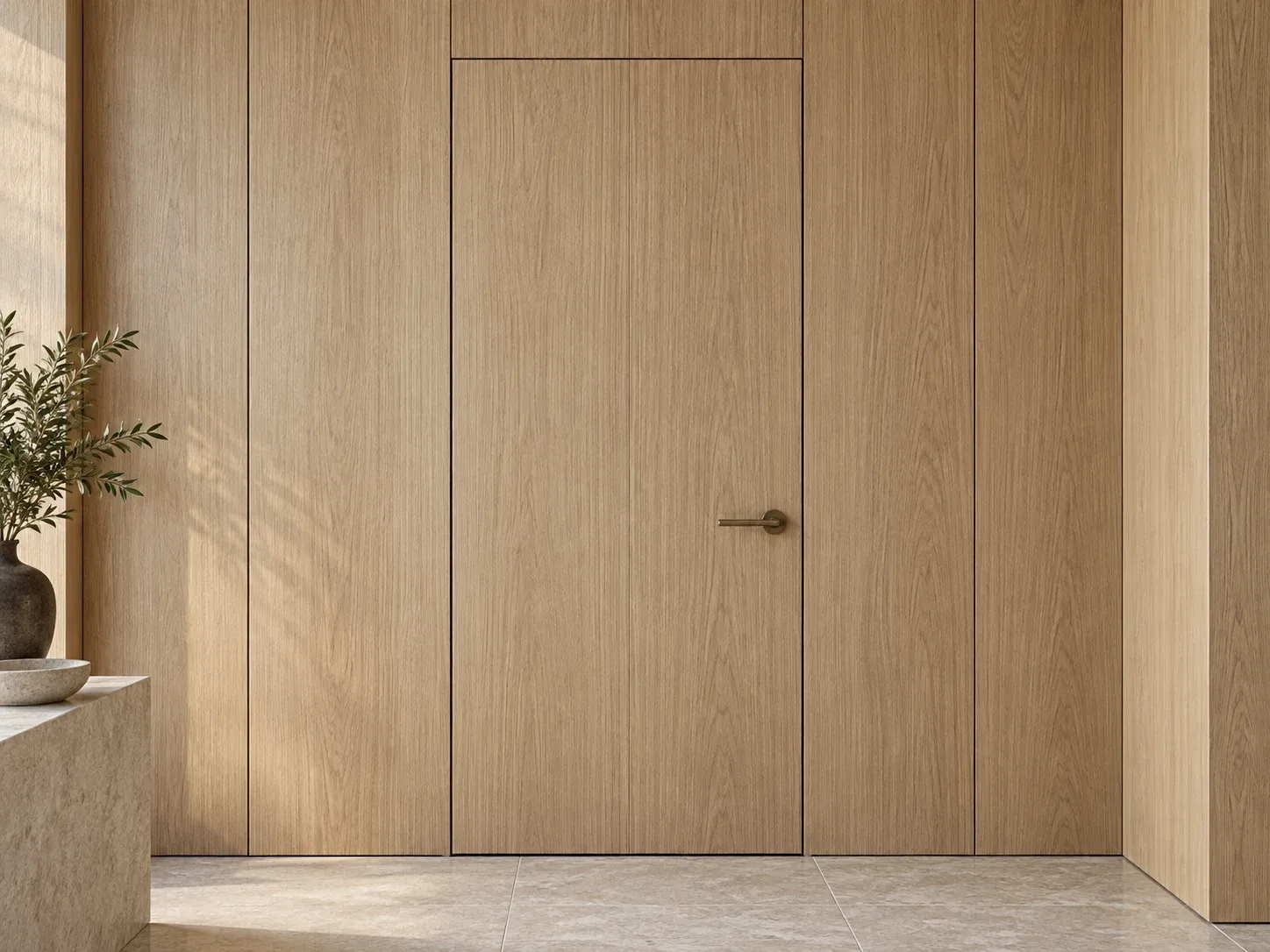
Yes — integrated doors and wall panels run through the same production stages as cabinetry, and on projects where they share the material, they should be approved and ordered together as one scope.
Clear scope. Clear accountability.
Production
Cabinetry, interior doors and wall panels are produced to approved drawings and material specifications at the Winrun factory in China — 20,000 m², made to order, with an 8-year product warranty.
U.S. construction
Site work, installation and project coordination are carried out by KWA Home, California Class B General Contractor, CSLB #1145730.