
MATERIALS & CRAFT · ARCADIA · SAN GABRIEL VALLEY
How to Choose Countertops for a Family Kitchen
Countertops are the hardest-working surface in the house and the most publicly visible one. The right choice is rarely the most expensive one — it is the one that matches how your kitchen actually gets used, and how much maintenance you will genuinely do.
THE SHORT ANSWER.
Choose for the life of the kitchen, not the photo.
Every countertop material trades the same three things against each other: how it handles daily abuse, how much attention it asks for, and what it costs. There is no material that wins all three — which is why the useful question is not “what is best” but “what fits this family, this kitchen, this budget.”
For most family kitchens in Arcadia, the decision comes down to a small number of materials that behave very differently. Below is how they actually compare, followed by the questions that decide between them.
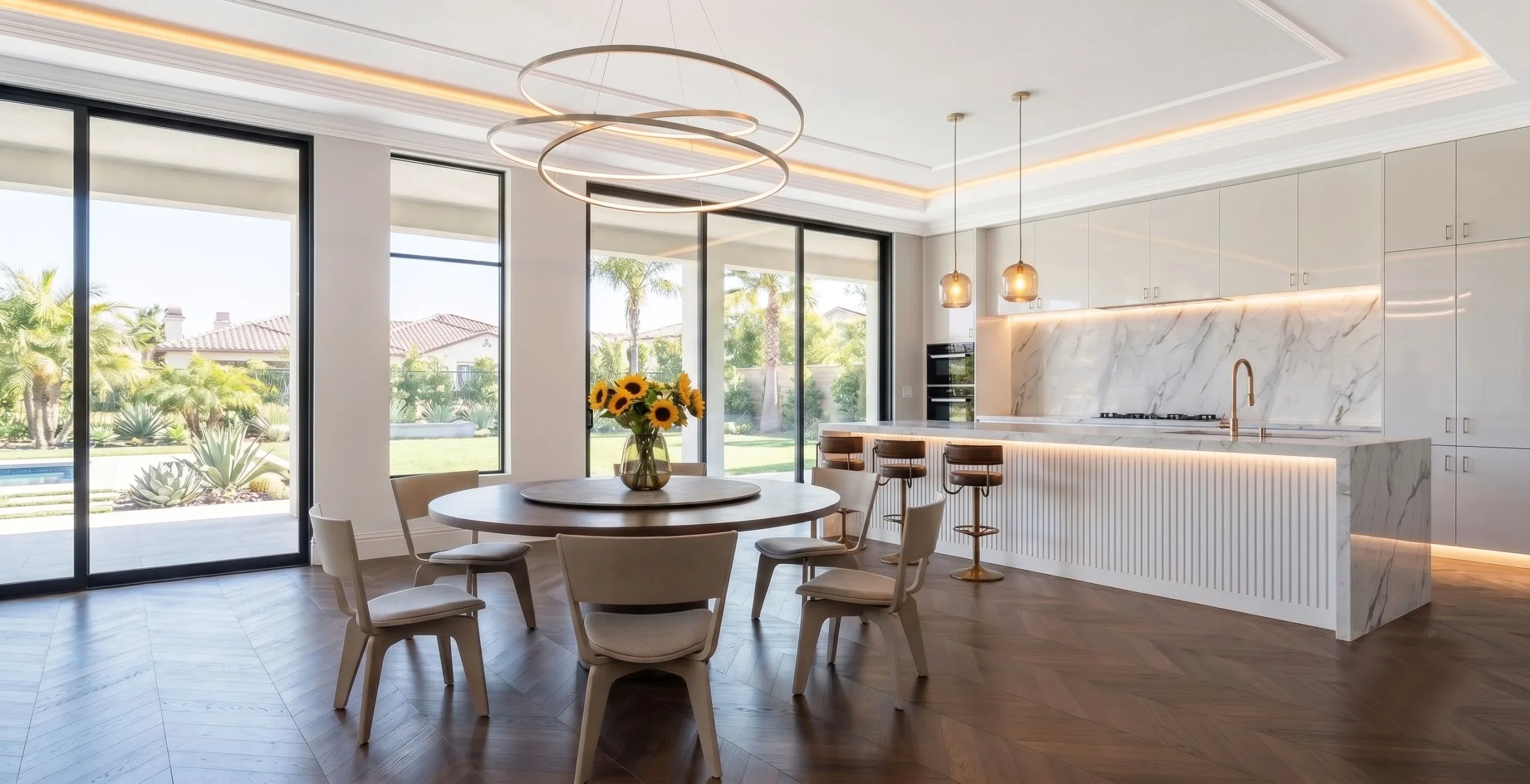
Countertops sit inside a bigger selection
The counter is one line in a coordinated kitchen — cabinetry, backsplash, hardware and appliances decide most of how the room reads. See the finish guide before locking this one.
THE MATERIALS.
How the main options compare on what matters.
| Material | Daily durability | Maintenance it asks for | Budget position |
|---|---|---|---|
| Quartz (engineered stone) | Very hard, non-porous, consistent. Chips under sharp impact but resists scratching well. | Low. Cleaning with standard products; no sealing. | Upper-mid. Consistent supply, wide pattern range. |
| Granite (natural stone) | Very hard and heat-tolerant. Every slab behaves slightly differently. | Low to moderate. Sealing on a schedule; choose the slab, not the name. | Mid, and wide — exotic slabs climb quickly. |
| Porcelain / sintered slab | Extremely hard, heat- and stain-proof, UV-stable. Can be brittle at cut-outs. | Very low. Effectively sealed; resistant to everything a kitchen does. | Upper. Fabrication needs a specialist. |
| Marble (natural stone) | Softer than granite; etches on acid and marks with use. | High. Sealing, prompt cleaning, and a genuine acceptance of patina. | Upper. The choice is aesthetic, not practical. |
| Solid surface | Softer; scratches and scorch are possible but repairable. | Low. Minor damage can often be sanded out in place. | Mid. Seamless joins are its signature. |
| Butcher block / wood | Warm and repairable; water is the enemy at seams and ends. | Moderate. Regular oiling; refinishing is straightforward. | Lower material cost, real maintenance cost. |
Two practical notes on this table. First, installation quality matters as much as the slab: a perfect material with a visible seam or an unsupported overhang will disappoint more than a modest material installed well. Second, “budget position” is relative — within each material, the price band is wide, and the fabricated and installed number is the only number that counts.
MATCHING THE KITCHEN.
Five questions that narrow the field fast.
How hard is the kitchen used?
Daily cooking from scratch, baking, canning and homework all argue for quartz or porcelain. A kitchen that hosts more than it cooks has more freedom.
Who is doing the maintaining?
Be honest. A surface that asks for regular sealing in a busy house becomes a resentment. Choose the maintenance level the household will actually keep.
What does the light do?
South-facing Arcadia kitchens get strong light for most of the day. Look at samples in the room, not in the showroom — patterns and veining read differently under real sun.
How does it meet the cabinetry?
The counter edge profile and thickness should be decided with the cabinet doors, not after. A thick slab with a shaker door reads differently than a slim edge with a slab door.
What happens when it is damaged?
Chips happen. Ask what repair looks like for the material you are choosing — solid surface sands out, stone is patched or replaced, and porcelain is replaced.
SPECIFYING AND INSTALL.
Where the counter sits in the sequence.
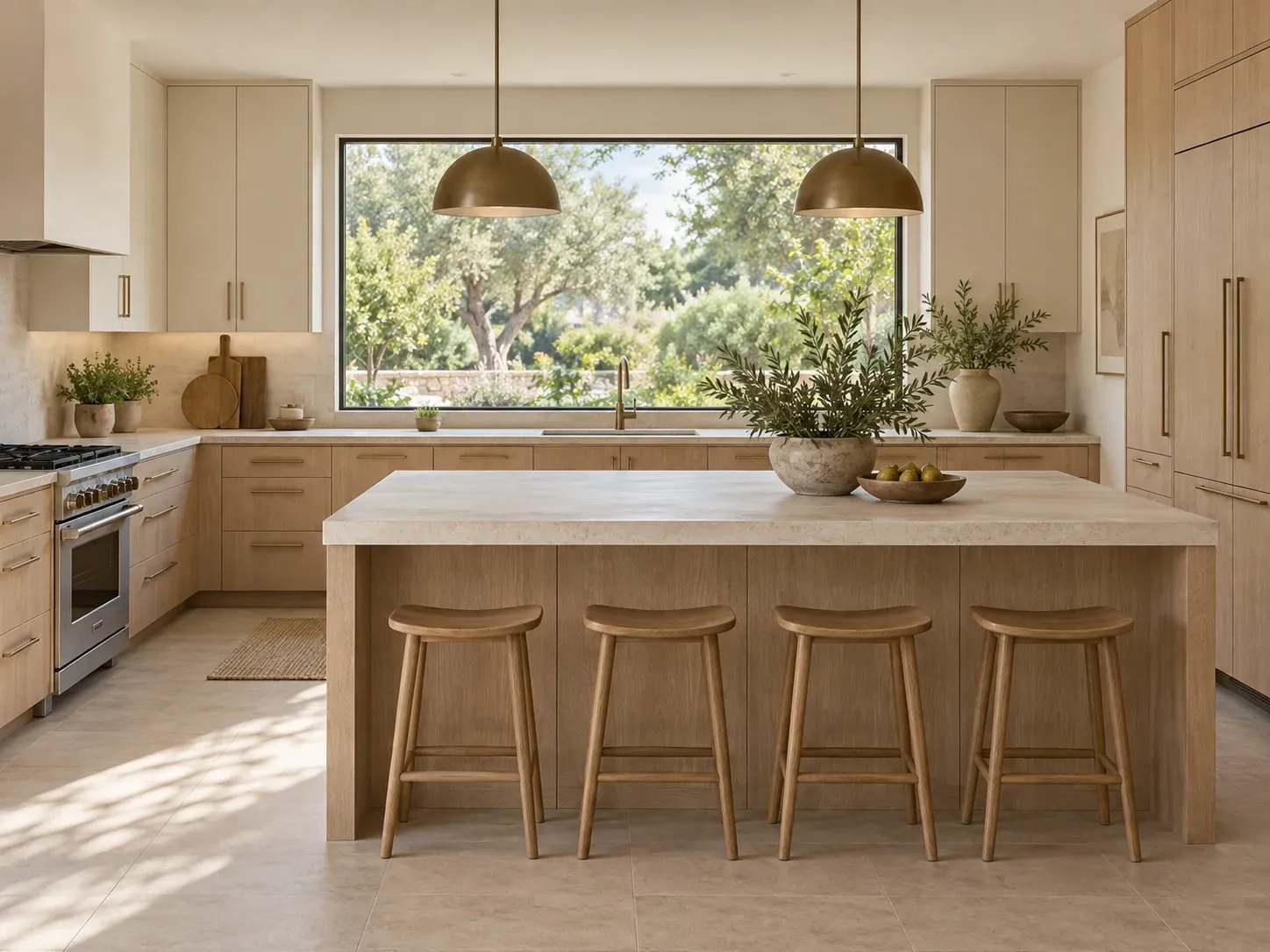
Countertops are templated, not measured from drawings — a digital or physical template is taken after the cabinets are installed, and the slab is cut to that. This is why the counter is a mid-to-late stage item: it cannot be finalised before the base it sits on exists.
Order the sequence correctly and the counter arrives when the kitchen is ready for it: cabinets set, template taken, fabrication scheduled, install followed immediately by the sink cut-out and plumbing connection. Order it late and the kitchen sits finished-but-unusable for weeks.
The cost guide covers where counters sit in the budget, and the material standards page covers how selections get approved as part of a coordinated scope.
CARE THAT ACTUALLY HAPPENS.
Four habits that keep any counter looking new.
| Habit | Why it works |
|---|---|
| Wipe spills when they happen | Almost every stain story starts with a spill that sat. Coffee, wine, turmeric and tomato are the usual suspects. |
| Use a trivet for hot pans | Quartz and solid surface can scorch or discolour; even granite prefers not to take a thermal shock repeatedly. |
| Cut on a board, not the counter | Sharp knives score every material on the list, and a cutting board is cheaper than a repair. |
| Know your sealer schedule | Natural stone wants resealing on a cycle. A phone reminder is the entire maintenance programme. |
FAQ.
Countertop questions we get most.
What is the best countertop for a busy family kitchen?
Quartz or porcelain, for most families. Both are non-porous, hard, and ask for nothing beyond normal cleaning. The choice between them usually comes down to pattern preference and who fabricates locally.
Is marble too delicate for a kitchen?
For a family kitchen that cooks daily, marble asks for more maintenance than most households want to keep up. It is a beautiful choice for a bakery counter or a bathroom, and an honest trade in a working kitchen.
Do I need to match the counter to the cabinets?
Not match — coordinate. Warm greys and creamy quartz work with both warm white and deep-toned cabinetry; strongly veined slabs compete with detailed door styles. Decide edge profile and thickness at the same time as the doors.
When are counters templated?
After the cabinets are installed and secured. Templating earlier means templating to a base that might still move, and the cut-outs will not line up.
How do seams work on a large kitchen?
Seams are normal and planned — the fabricator places them where they read least, usually at inside corners or changes of direction. A good seam in a good material is close to invisible; a rushed one is the first thing you see every morning.
Clear scope. Clear accountability.
Design and selections
Layout, material direction and drawings are agreed with you and your designer before construction pricing is finalised.
Construction
Remodeling work is carried out by MIT Construction, California Class B General Contractor, CSLB #964155.